
“Although I’m only 29, I’ve already been diagnosed with cancer three times and am currently undergoing treatment for breast cancer.
After everything I’ve been through, I’ve become passionate about encouraging people of all ages to notice changes in their bodies and to advocate for themselves with their doctors. I’ve signed up for the Full Moon (26.2 miles) at The MoonWalk London to raise even more awareness and give myself a positive goal during my recovery.
My first cancer diagnosis – a rare type of sarcoma in my thigh – was when I was only 16 years old.
Not long after I’d finished my GCSE’s, I noticed a lump when I was moisturising my legs. It was a soft tissue cancer, very unusual in someone so young. I needed two operations, but no further treatment, although I was regularly monitored at the Royal Marsden Hospital. Mentally, I’d moved on.
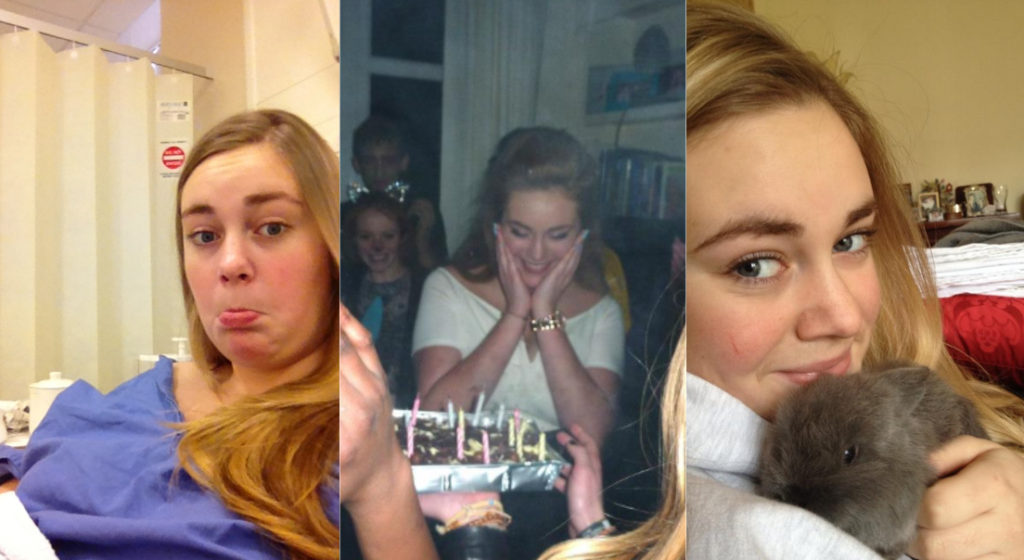
Left to right: Awaiting surgery, my 17th birthday party, me & new rabbit Herby
When I was 22, I began feeling pain in the middle toe of my right foot while I was studying to become a teacher. I assumed I’d injured it on a university night out, but I felt it was rather strange that there was no bruising, so I went along to a minor injuries unit. An X-ray didn’t give any answers, so I was referred back to the Marsden for a biopsy.
The results showed I had another rare cancer – this time a type of bone cancer in the cartilage.
The same surgeon who had operated on my thigh amputated my toe. It was a slow-growing grade 1 tumour, and once again, no additional treatment was needed. I moved on again.
Because I’d had two unrelated cancers, I underwent genetic testing, including screening for the altered BRCA gene, which increases the risk of breast cancer. Everything came back clear! I also had no family history of breast cancer and although they didn’t expect me to develop the disease, my team offered me annual MRI breast scans. At the age of 22, I was too young for mammograms, and to this day I’m not entirely sure why they decided to scan my breasts so proactively, but I’m so grateful that they did.
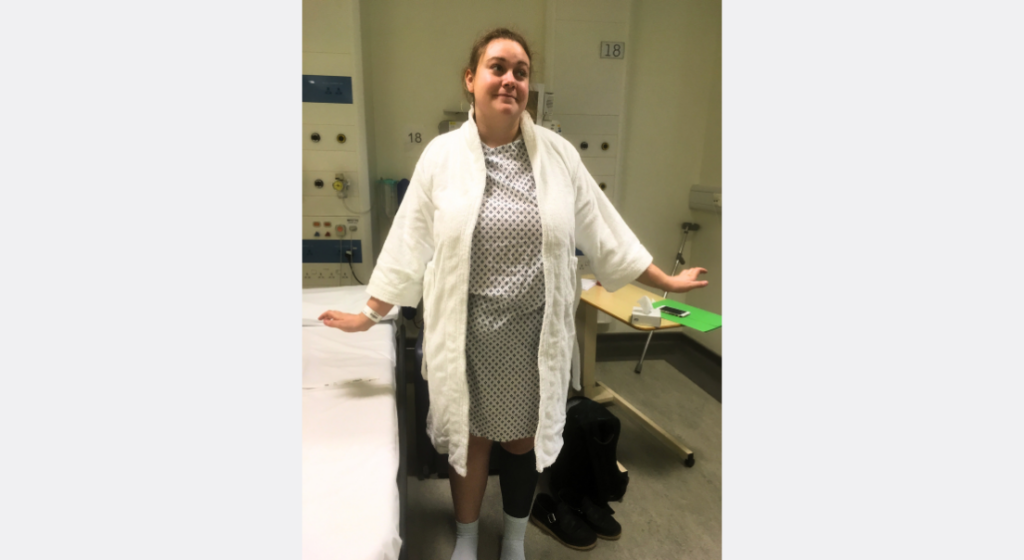
Awaiting biopsy
In the summer of 2025, during one of these routine MRIs, a 2cm lump was discovered in my breast.
It hadn’t been there the year before. I later had an ultrasound and biopsy, and on the first day of the school summer holidays, at just 29 years old, I was diagnosed with breast cancer. I only recalled one symptom before then – some brief pain in my breast while standing in a colleague’s classroom. I’d dismissed it as hormonal, because I was on the contraceptive implant and not having regular periods.
Even after the MRI found the lump, I still couldn’t feel it myself. Without that early screening – which I was receiving far earlier than the NHS would usually offer – my cancer would almost certainly have been detected much later. I consider myself incredibly lucky. Early detection is life-saving, and while screening programmes cost money, catching cancer early (either by screening or self-checking) saves the NHS far more in long-term treatment and prevents people from facing far worse outcomes. I often think that had my first sarcoma not been found as early as it was, I might have lost my entire leg.
Of all three cancers I’ve faced, breast cancer has been the most significant and complicated.
The previous two were dealt with relatively simply: six weeks, surgery, recovery, and done. This time it’s been completely different. In October 2025, I underwent nine hours of surgery: a double mastectomy – recommended due to my medical history – and immediate reconstruction. I wanted both breasts removed because after three cancers, my priority was doing everything possible to prevent another diagnosis. The fear of recurrence is something every cancer patient lives with; I have that feeling multiplied by three! I also had a full lymph node clearance under my left armpit during the surgery, after my MRI showed a swollen lymph node, which was positive for cancer cells when it was biopsied.
My post op tests showed that my breast tumour was grade 2 and had been caught early thanks to the annual MRI scans. My doctors are now looking again my genetic results, to make sure nothing was missed. Until they understand more, my treatment options have to be really carefully considered; for example, radiotherapy poses a risk because it could potentially trigger further tumours.
With every diagnosis, I find myself asking: why me again?
I replay everything in my mind. Was it because I smoked a packet of cigarettes at 16? Is it because I’m a size 20 instead of a size 8? These thoughts are hard to escape, but deep down I know that my body is strong and capable – and that I am too. I’ve survived three major surgeries, and I’m still moving forward!
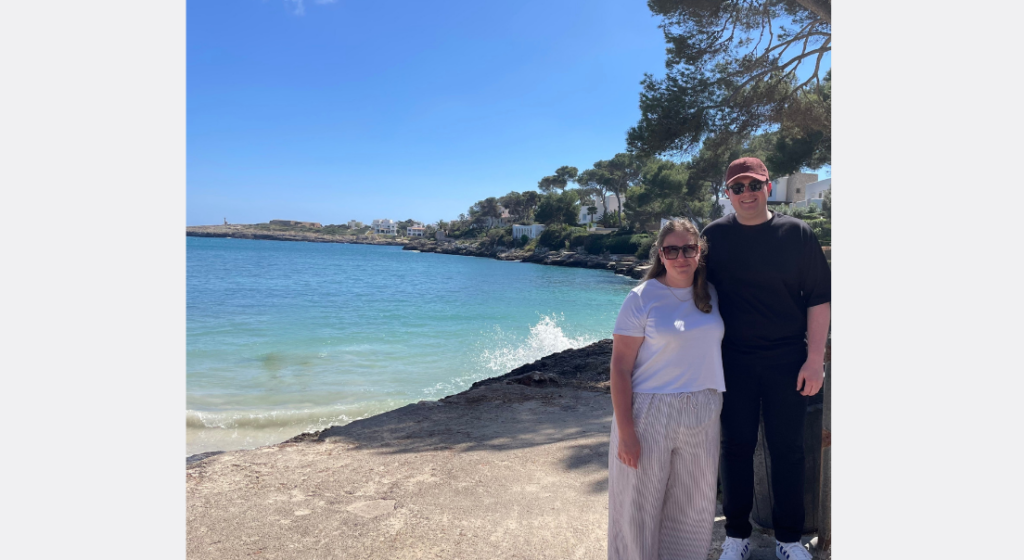
With my partner Seán on holiday earlier in the year
This time, treatment will last around a year. I’ve already undergone a fertility preservation cycle – becoming a mum has always been my biggest dream, and I can’t help wondering whether cancer may have taken that away from me. My body is now covered in scars – from my nipples to my toes – and some days I feel like a character from a Frankenstein film. The emotional impact has been huge. I’ve experienced depression at times, but I also know I’m resilient, and I’m incredibly lucky to have the unwavering support of my partner, my parents, and my friends.
I’m facing around six months of chemotherapy following my recovery from the surgery. I wanted something positive to focus on during what’s going to be a tough time, which is why I signed up for the Full Moon (26.2 miles) at The MoonWalk London 2026.
I’m planning to train for The MoonWalk with my two best friends from school, Gabby and Sophie, who have been by my side throughout every cancer diagnosis. They are amazing motivators, and I’m looking forward to the daily structure and fresh air the training walks will bring. None of us has ever taken on anything like a marathon before! I certainly couldn’t run one, but walking feels realistic – and looking ahead to The MoonWalk, I don’t think I’ve actually ever been so excited about the thought of exercise! I can’t wait.
As I continue to recover and look toward the future, my message to everyone is simple: listen to your body.
It gives you signs! And until screening is available to everyone who needs it, no matter their age, you must keep checking yourself regularly and also advocate for yourself. Push for answers. Make yourself heard. Early detection can save your life – just as it has potentially saved mine – three times.”
Thank you for sharing your story Freya and we look forward to seeing you and your team at The MoonWalk London 2026!